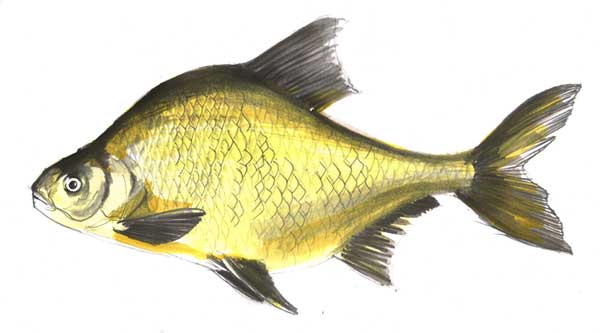
Bream (Abramis brama)
Current record: 22lb 11oz
Water: Ferry Lagoon, Fen Drayton Lakes
Bream on most UK waters means the common bream (Abramis brama), a deep-bodied, laterally flattened fish with a distinctive humped back that gets more pronounced with age. Younger fish are silvery-grey; older ones, especially in clear water, take on a bronze sheen. The mouth is downward-facing and protrusible, built for hoovering food off the bottom, and the fins run grey to almost black, never reddish, which is a handy way to rule out rudd if you're ever unsure.
Typical fish run 30–55cm and 2–4kg, though bream can grow well beyond that, exceptional specimens have topped 75cm and 9kg. They're also long-lived, easily reaching a couple of decades in the right water.
Bream feed opportunistically on invertebrates, small fish, and plant matter, and activity picks up noticeably through the warmer months. They shoal, sometimes in large numbers, and a feeding shoal working a swim is one of the more recognisable sights on a bream water, bubbles breaking the surface as they root through the bottom silt.
Worth knowing if you're targeting a specific water: bream have a smaller relative, the silver bream (Blicca bjoerkna), that gets mistaken for a young common bream fairly often. Silver bream stay noticeably smaller and have a shorter anal fin, useful to know before you get excited about a "big net of bream" that turns out to be silvers.